
In various fields of industrial production, whether it is hydraulic systems, pneumatic equipment, or mechanical devices such as automobiles and water pumps, they all rely on a seemingly small but crucial component - seals. It is like the "sealing guard" of the equipment, silently guarding various connection parts, not only to prevent internal fluid and gas leakage, ensure stable system pressure, but also to block external dust and impurities from entering, guarding the precise structure inside the equipment, directly affecting the operating efficiency, service life, and safety and environmental protection of the equipment. Mastering the classification, material characteristics, functions, and selection methods of seals is of great significance for the stable operation of industrial production.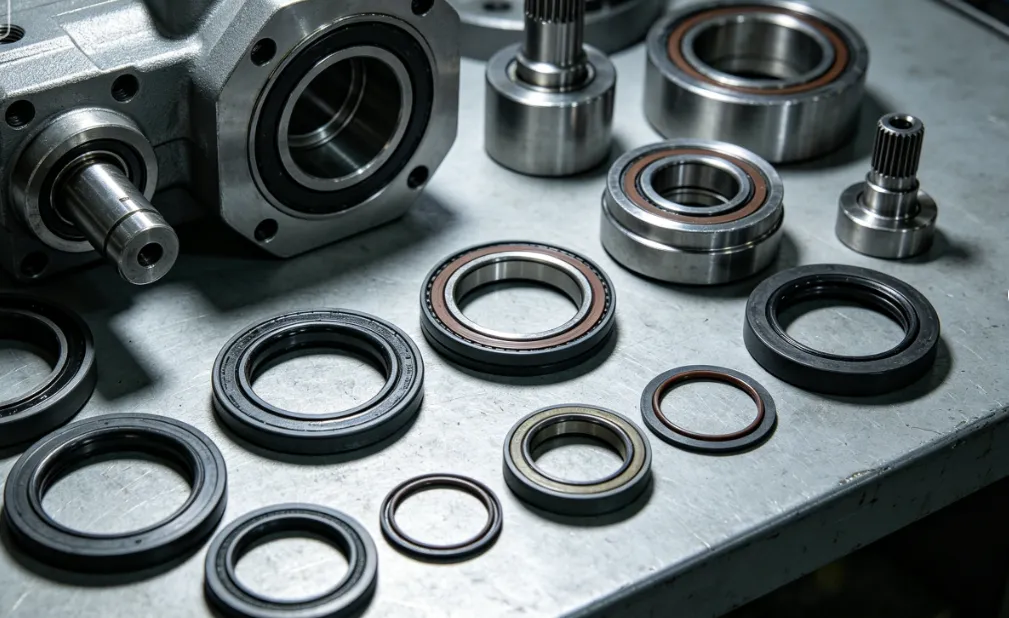
There are various ways to classify seals, which can be divided into two categories based on their working status: static seals and dynamic seals. The two are suitable for different equipment connection scenarios, and the core difference lies in whether there is relative motion on the joint surface.
Static sealing is mainly used for static connection parts such as flanges, end caps, and joints, relying on the compression of sealing materials to fill gaps and achieve sealing effects. Among them, O-ring is the most common static seal, with a circular cross-section, simple structure, low cost, and strong universality. It can not only be used for static sealing, but some models can also be adapted to mild dynamic sealing scenarios. Gaskets are mainly flat sheet materials, including rubber, metal, graphite, etc. Suitable materials can be selected according to the working conditions, and can be widely used for various flange surface seals. In addition, as a liquid sealing material, sealant can fill irregular joint surfaces and form a sealing layer after curing, suitable for scenarios with special shapes that cannot use conventional seals.
Dynamic sealing refers to scenarios where there is relative motion between the mating surfaces, such as rotating shafts, reciprocating piston rods, etc. It is necessary to ensure sealing performance while also considering wear and friction resistance to avoid sealing failure caused by motion wear. Dynamic seals can be further divided into reciprocating seals and rotary seals: reciprocating seals are mainly used in hydraulic cylinders, air cylinders, and other equipment. The U/Y ring is designed with lip self tightening to adapt to medium and high pressure reciprocating motion, and the sealing effect is stable; The V-shaped combination ring adopts a multi-layer stacking structure, which is resistant to high pressure and heavy load, and suitable for harsh reciprocating sealing conditions. Rotary seals are mainly used for rotating components such as pumps and motor shafts, with skeleton oil seals (TC oil seals) being the most commonly used type. With the support of metal skeletons and springs, they can seal oil and prevent dust, making them suitable for most conventional rotating scenarios; Mechanical seals are composed of dynamic and static rings, and with the advantage of end face contact sealing, they have become the preferred choice for high-speed, high-pressure, and high-precision scenarios such as water pumps and compressors.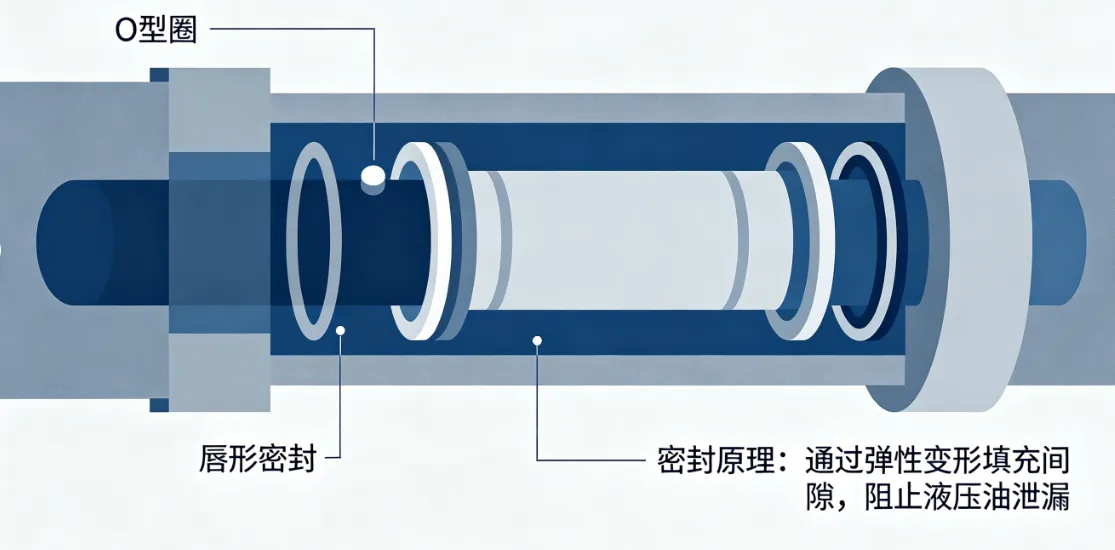
The performance of seals depends on the materials used, and the key to material selection is to match the three core factors of temperature, pressure, and medium in the working conditions. Seals made of different materials have significant differences in their applicable scenarios, temperature ranges, and core characteristics, and precise matching is necessary to avoid seal failure. The commonly used sealing materials mainly include the following: Nitrile rubber (NBR) is oil resistant, wear-resistant, and cost-effective, suitable for conventional working conditions such as hydraulic oil and lubricating oil, with a temperature range of -30 ℃~120 ℃; Fluororubber (FKM) is resistant to high temperatures and strong corrosion, and can adapt to harsh media such as strong acids, alkalis, and fuel. Its temperature range can reach -20 ℃~200 ℃; Ethylene propylene diene monomer (EPDM) is water resistant, steam resistant and anti-aging, suitable for hot water, steam, weak acid and weak alkali scenarios, with a temperature range of -40 ℃~150 ℃; Polyurethane (PU) has high strength and wear resistance, designed specifically for high-pressure hydraulic cylinders and heavy-duty reciprocating motion, with a temperature range of -30 ℃~100 ℃; Polytetrafluoroethylene (PTFE) has self-lubricating, chemically inert, and low friction properties, suitable for corrosion resistance, oil-free lubrication, and food grade scenarios, with a wide temperature range of -100 ℃~260 ℃.
As a "protective barrier" for industrial equipment, the core function of seals is mainly reflected in three aspects: first, to prevent leakage, prevent internal media such as oil, water, and gas from leaking, maintain system pressure stability, and reduce energy loss; The second is to prevent intrusion, blocking external dust, sediment, moisture and other impurities from entering the interior of the equipment, and avoiding wear and damage to precision components; The third is to ensure performance. Through stable sealing effect, the service life of equipment is extended, maintenance costs are reduced, and the safety and environmental protection of the production process are guaranteed, avoiding safety accidents or environmental pollution caused by medium leakage.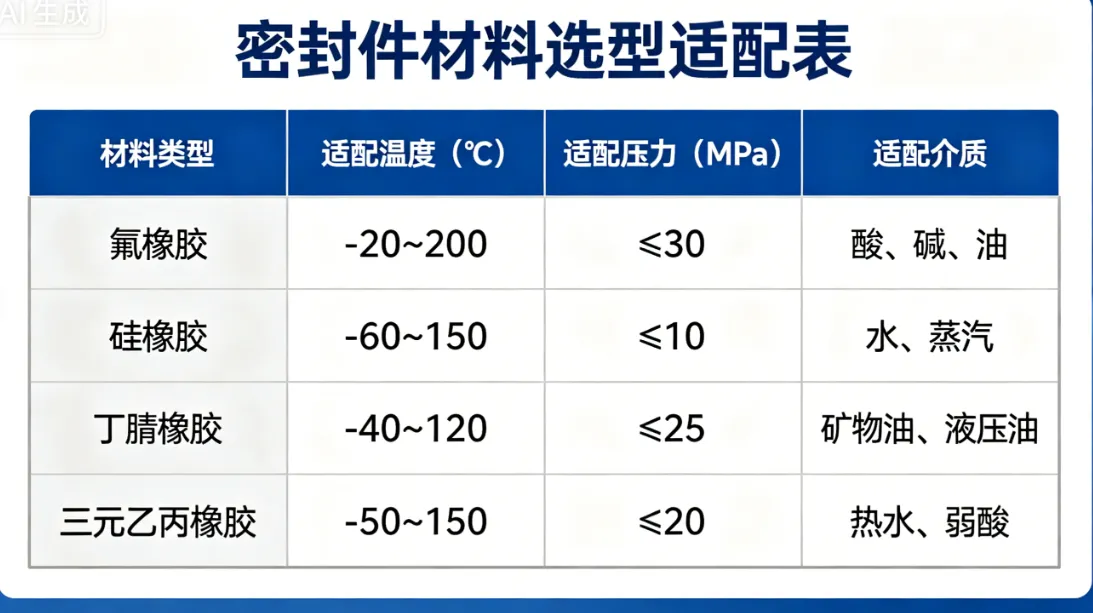
In practical applications, seal failure often occurs due to four common reasons: firstly, incorrect selection, which is the most common problem. For example, if the material is not resistant to the working medium, the temperature exceeds the material's tolerance range, or the seal structure does not match the movement form, it will directly lead to seal failure; Secondly, improper installation can damage the sealing structure and affect the sealing effect if the sealing components are scratched, twisted, or compressed insufficiently or excessively during the installation process; The third is aging and wear. Long term use under high temperature and high pressure conditions will gradually cause the sealing material to lose its elasticity, resulting in wear, cracking, and ultimately leading to seal failure; Fourthly, the working conditions are harsh, with a large amount of dust, impurities, or excessive pressure fluctuations in the equipment working environment, which can accelerate the wear of seals and shorten their service life.
Overall, although seals are small, they are a crucial component for the normal operation of industrial equipment. Whether it is selection, installation, or maintenance, it is necessary to combine specific working conditions, accurately match sealing forms, materials, and structures, and avoid common failure misconceptions. Only by selecting suitable sealing components and maintaining them properly can their sealing function be fully utilized, ensuring the stable, efficient, and safe operation of industrial equipment and safeguarding production. If precise selection is required, specific sealing forms, working media, temperature, pressure and other working condition information can be combined to further match suitable sealing component types and materials.