
Seals are essential core components in industrial production and mechanical equipment. Their function is to seal the medium, block impurities, ensure the normal operation of equipment, and reduce losses caused by wear and leakage. According to their different functions and materials, seals can be divided into multiple categories, each with its unique functions and adaptation scenarios. Below, based on the classification, we will analyze in detail the functions and practical uses of each type of seal, allowing everyone to fully understand the core value of seals.
1、 Classified by function: Suitable for different sports scenarios, accurately exerting sealing and supporting effects
Seals can be divided into six categories according to their functions: shaft seals, hole seals, dust seals, guide rings, fixed seals, and rotary seals. Each category corresponds to specific equipment parts and usage requirements, accurately solving sealing and support problems under different working conditions.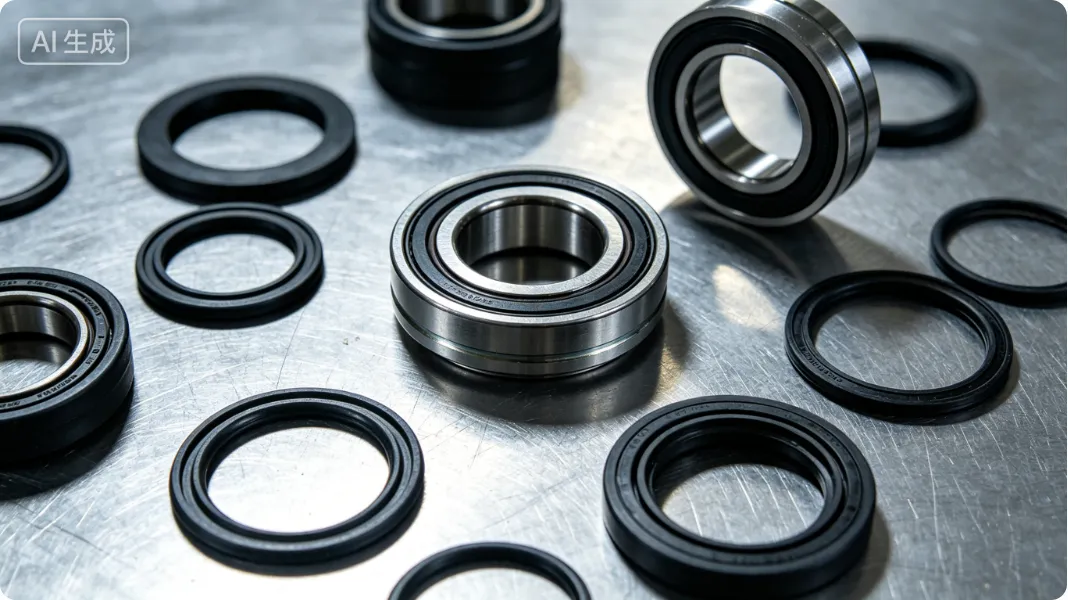
1. Shaft seal
Shaft seals are mainly assembled on the outer diameter of rotating and reciprocating shafts, such as motor shafts, reducer shafts, oil cylinder piston rods, and other parts. Its core function is to prevent the leakage of media (such as oil, water, hydraulic oil) inside the equipment, while also blocking the entry of external dust and impurities into the equipment to avoid wear and tear on internal components. In practical applications, it can firmly hold the lubricating oil and hydraulic oil in the equipment, prevent medium leakage from causing insufficient lubrication and frequent failures, and is an essential sealing component for various rotating shaft parts.
2. Seal the hole with a seal
The hole seal is mainly installed on the outer ring of the piston of the oil cylinder and cylinder, clamped on the inner wall of the cylinder, and is the most core pressure bearing seal of the oil cylinder and cylinder. Its core function is to seal the gap between the piston and the cylinder body, lock hydraulic or pneumatic pressure, and prevent the medium from being compressed from both sides of the piston. The practical use is very clear, which is to ensure that the oil cylinder and air cylinder can exert force normally by locking pressure, lift heavy objects, and operate stably without releasing pressure. It is widely used in various hydraulic and pneumatic equipment.
3. Dust seal
Dust seals are usually installed on the outermost first layer of equipment, and are not designed to withstand pressure. Their core function is to specifically block impurities such as dust, mud, iron filings, and rainwater from entering the sealed chamber. In practical applications, it is like the "first line of defense" of equipment, which can protect the main seal and moving parts inside from being scratched by impurities, thereby extending the service life of the entire sealing system. It is commonly found in exposed parts such as oil cylinder piston rods and telescopic mechanisms.
4. Guiding ring (support ring)
Unlike other seals, the guide ring does not have a sealing and pressure maintaining function. Its core function is to provide support, guidance, and centering. It is installed on the piston or shaft to prevent eccentricity and eccentric wear during piston and shaft movement, avoiding direct scratching of the cylinder wall and shaft surface by metal components, while sharing radial loads, ensuring smooth component movement, and reducing unilateral wear of seals. The practical use is to "straighten" moving parts, making the equipment run smoother, reducing component wear, and extending the overall life of the equipment.
5. Fixed seal
Fixed seals are specifically used for static joint surfaces without relative motion, such as flanges, end caps, box joint surfaces, valve static contact surfaces, and other parts. Its core function is to fill the plane gap, achieve static sealing, and prevent leakage of media such as gas, water, and oil. In practical applications, it can ensure that there is no air leakage, water leakage, or oil leakage at the equipment joints, ensuring the sealing and stability of the equipment, and is suitable for sealing scenarios of various stationary components.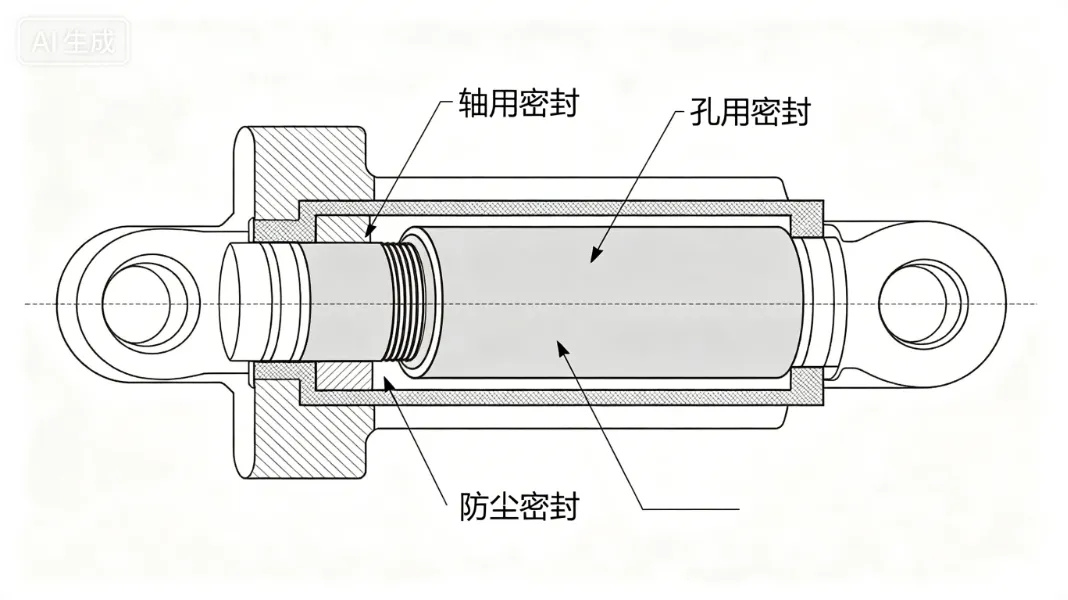
6. Rotary seal
Rotary seals are specifically designed for low-speed or high-speed rotating motion, and are different from ordinary reciprocating seals. They are mainly used for shaft parts that rotate continuously, such as bearing positions, rotary joints, and rotary valves. Its core function is to maintain sealing while the shaft rotates continuously, while also possessing high temperature resistance and speed friction resistance characteristics. The practical use is to solve the sealing problem of the rotating shaft, ensure that the medium does not leak when the shaft rotates, and adapt to the sealing requirements of various rotating equipment.
2、 Classified by material: Suitable for different media environments to ensure sealing reliability
The material of the seal directly determines its temperature resistance, oil resistance, corrosion resistance and other properties, which in turn affects its adaptability to different scenarios. According to materials, it can be divided into eight categories: nitrile rubber, EPDM rubber, fluororubber, silicone rubber, fluorosilicone rubber, nylon, polyurethane, engineering plastics, etc. Each type of material has different characteristics and practical uses.
1. Nitrile rubber (NBR)
Nitrile rubber is the most universal and cost-effective sealing material, with characteristics of oil resistance, hydraulic oil resistance, and wear resistance, but it is not resistant to high temperatures, acid and alkali, and ozone. It has a wide range of practical applications and can be used in the sealing of most conventional machinery, especially for ordinary hydraulic and pneumatic equipment, as well as oil and fuel related sealing scenarios. It is one of the most commonly used sealing materials in industrial production.
2. Ethylene propylene diene monomer (EPDM) rubber
The core advantages of EPDM rubber are high and low temperature resistance, aging resistance, ozone resistance, water resistance, steam resistance, acid and alkali resistance, but not mineral oil resistance. The practical use is mainly concentrated in scenarios related to water, steam, and acid-base, such as water pipes, plumbing equipment, steam equipment, drinking water equipment, acid-base chemical equipment, and outdoor outdoor equipment. It can adapt to harsh outdoor and corrosive environments and is not easily aged.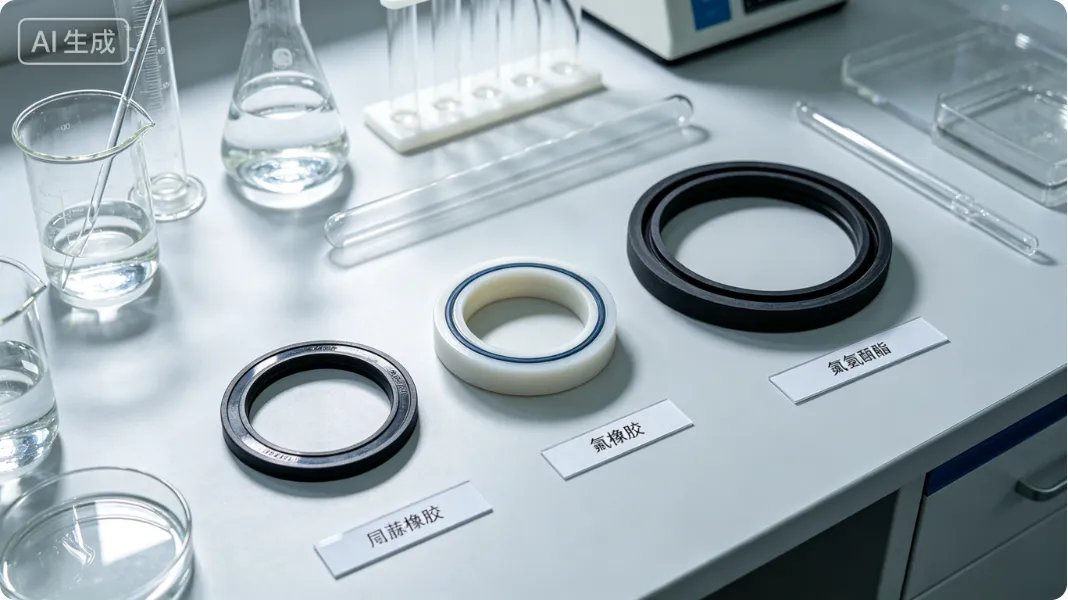
3. Fluororubber (FKM)
Fluororubber is a sealing material with extremely strong comprehensive performance, which has the characteristics of high temperature resistance, strong acid and alkali resistance, organic solvent resistance, fuel resistance, and corrosion resistance, but the cost is relatively high. The practical use is mainly for harsh working conditions such as high temperature and corrosion, such as chemical equipment, automotive engines, fuel systems, strong acid and alkali treatment equipment, etc. It can maintain good sealing performance in extreme environments.
4. Silicone (VMQ)
Silicone has the characteristics of high and low temperature resistance, environmental friendliness and non toxicity, good flexibility and elasticity, and good insulation, but its mechanical wear resistance is average and it is not resistant to high-pressure oil. The practical use is mainly concentrated in scenarios with high requirements for environmental protection and temperature, such as food grade equipment, medical equipment, household appliances, drinking water equipment, and low-temperature and low-pressure static sealing scenarios, which meet the requirements of non-toxic environmental protection.
5. Fluorosilicone rubber (FVMQ)
Fluorosilicone rubber combines the advantages of silicone and fluororubber, possessing both high and low temperature resistance, as well as fuel and chemical corrosion resistance, and good low-temperature toughness. The practical use is mainly for dual harsh environments, such as automotive fuel systems, aviation equipment, and working conditions where low temperature and corrosion coexist. It can take into account both high and low temperature adaptability and medium resistance.
6. Nylon
Nylon material has high hardness, wear resistance, compression resistance, and good dimensional stability, but its elasticity is poor and it is not suitable for use as the main seal. The practical use is mainly to make auxiliary sealing components such as retaining rings, limit plates, and anti extrusion rings. Under high pressure conditions, it can support rubber seals from being crushed, ensure the normal operation of the main seal, and improve the pressure bearing capacity of the sealing system.
7. Polyurethane (PU)
Polyurethane has the characteristics of ultra-high wear resistance, high pressure resistance, tear resistance, and hydraulic oil resistance. It has extremely strong toughness, but its temperature resistance range is average. The practical use is mainly for high-pressure and high wear scenarios, such as construction machinery, high-pressure oil cylinders, forklifts, excavators and other equipment. Its wear resistance life is much better than ordinary rubber, making it the preferred material for high-pressure reciprocating seals.
8. Engineering plastics
Engineering plastics have the characteristics of self-lubricating, wear-resistant, low friction, chemical resistance, and non rusting, with good rigidity and low friction coefficient. The practical use is mainly for making guide rings, sliding sleeves, and oil-free lubrication seals, suitable for oil-free lubrication conditions and precision moving parts. It can achieve smooth movement without additional oil, reducing component wear.
3、 Summary
The core of the classification of seals is "adaptation" - classified according to their functions, in order to match different motion conditions of equipment (reciprocating, rotating, stationary), and solve different needs such as sealing, support, dust prevention, etc; Classifying by material is to match different media environments (oil, water, acid and alkali, high temperature), ensuring the reliability and service life of the seal. Understanding the classification, functions, and practical uses of seals can help us choose suitable seals based on specific equipment and working conditions, reduce equipment failures, extend equipment life, and reduce production losses. This is also the essential core significance of seals in industrial production.