
In many industries such as chemical engineering, metallurgy, electroplating, marine engineering, and municipal environmental protection, strong corrosion conditions are ubiquitous - immersion in strong acids and alkalis, erosion by strong oxidants, penetration of corrosive gases, and complex environments such as high and low temperatures, high pressures, and alternating media, which place extremely high demands on the performance of sealing components. As the core protective component under such working conditions, the performance of corrosion-resistant rubber seals directly determines the safety, stability, and service life of equipment operation. This article will comprehensively analyze the core characteristics of corrosion-resistant rubber seals, and provide scientific and accurate selection guidelines based on different corrosion conditions, providing reference for industry applications.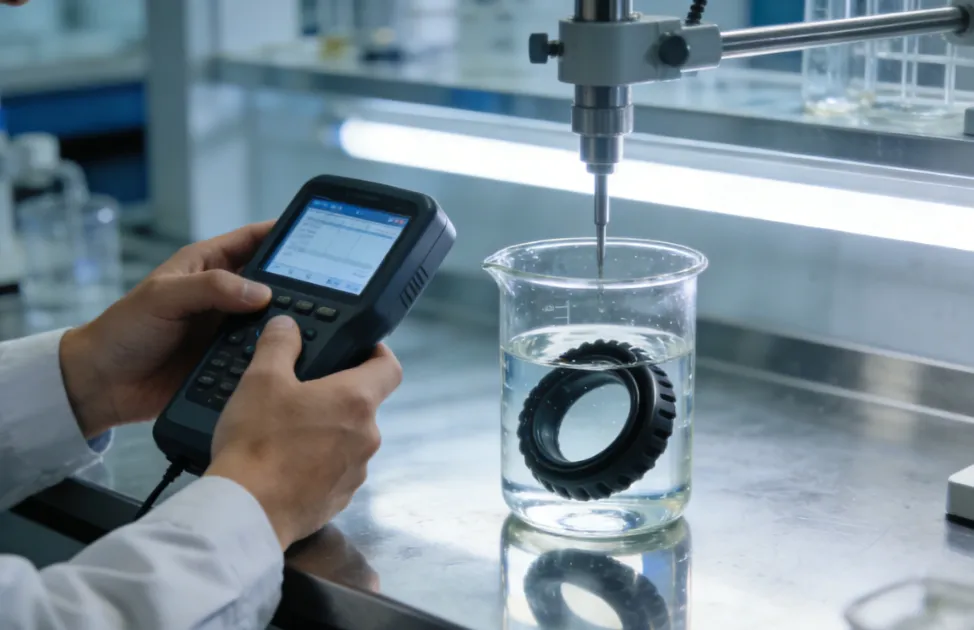
1、 Core characteristics of corrosion-resistant rubber seals
The core value of corrosion-resistant rubber seals is "corrosion resistance without failure, sealing without leakage, adaptability to working conditions, and long-term stability". Its characteristics revolve around three core aspects: medium corrosion resistance, structural sealing stability, and adaptability to working conditions, while also considering physical and mechanical properties and additional usage advantages. It can be specifically divided into five categories.
(1) Core universal corrosion resistance characteristics
Corrosion resistance is the core competitiveness of this type of seal, and it is also the key to distinguishing it from ordinary rubber seals. Firstly, it has a wide spectrum and strong medium tolerance, and can withstand strong acids (sulfuric acid, hydrochloric acid, nitric acid, etc.), strong bases (sodium hydroxide, ammonia, etc.), strong oxidants (sodium hypochlorite, hydrogen peroxide, etc.), organic solvents (ketones, esters, etc.), salt spray, corrosive slurries, etc. for a long time. The swelling rate, weight change rate, and hardness change rate are all controlled within the allowable range of industry standards (usually swelling rate<10%), and there will be no failure phenomena such as cracking, powdering, softening, etc. Secondly, low medium permeability, dense rubber molecular structure, high cross-linking degree, and extremely low gas/liquid permeability coefficient for corrosive media can effectively prevent medium leakage through the sealing body, ensuring the airtightness and liquid tightness of the sealing system. Thirdly, it is resistant to medium aging stability. After long-term use in corrosive media (thousands to tens of thousands of hours), its physical properties such as tensile strength and elongation at break, as well as sealing performance, do not significantly deteriorate. It will not cause sealing failure due to chemical reactions such as oxidation and hydrolysis between the medium and rubber.
(2) Key physical and mechanical sealing characteristics
The stable performance of sealing cannot be achieved without excellent physical and mechanical performance support. Firstly, it has excellent elasticity and resilience, which can quickly recover to its original state after deformation such as compression and stretching. The compression permanent deformation rate is extremely low (<20% at room temperature and<30% at high temperature), ensuring that it can still tightly adhere to the sealing surface after long-term loading, eliminating sealing gaps. The second is sufficient mechanical strength, with high tensile strength (usually ≥ 10MPa), tear strength (≥ 20kN/m), and wear resistance, able to withstand installation squeezing force, medium pressure, and slight friction during equipment operation, avoiding damage and tearing caused by mechanical force. The third is precise dimensional stability, with strict control of tolerances (usually ± 0.05~0.2mm) during production, and small thermal expansion and contraction coefficients under corrosive media and temperature changes, resulting in low dimensional deformation and preventing leakage due to poor fit.
(3) Adaptation characteristics of working environment
The industrial working conditions are complex and varied, and corrosion-resistant rubber seals need to have good environmental adaptability. One is the compatibility of wide temperature and corrosion resistance. Conventional products can be adapted to temperatures ranging from -40 ℃ to 150 ℃, while special adhesives can reach temperatures as high as -60 ℃ to 200 ℃ or even higher. They can still maintain elasticity and corrosion resistance under alternating high and low temperature conditions, without brittle cracking or loss of elasticity. The second is weather resistance and environmental aging resistance, taking into account ozone resistance, UV resistance, and moisture and heat aging resistance. Even in strong corrosive outdoor environments such as marine atmosphere and chemical plant outdoor environments, there will be no surface cracking or performance degradation. The third is the compatibility with the sealing surface, with a smooth and defect free surface, good adhesion with metal, plastic and other sealing surfaces, moderate friction coefficient, and some special products may also be treated with polytetrafluoroethylene coating to enhance corrosion resistance and reduce friction.
(4) Focus on the characteristics of different mainstream adhesive types
The performance of strong corrosion resistant seals is largely determined by the type of adhesive, and different types of adhesives have different emphasis on corrosion resistance, which needs to be selected according to the type of medium. FKM/Viton is resistant to strong oxidants, high-temperature oils, and organic solvents, and is suitable for chemical high-temperature pump valves and other scenarios; Perfluororubber (FFKM) is resistant to super strong corrosion (such as concentrated acid, fuming nitric acid) and ultra-high temperature, and is used in high-end fields such as semiconductors and aerospace; Ethylene propylene rubber (EPDM) is resistant to strong alkali, weak acid, and salt spray, and is suitable for municipal water supply and drainage, as well as marine engineering; Chloroprene rubber (CR) is resistant to weak acids, salt spray, and has good flame retardancy, and is used in metallurgical acid pickling and other scenarios; Butyl rubber (IIR) has extremely low gas permeability and is suitable for sealing corrosive gases; Rubber composite PTFE is resistant to all strong acids, alkalis, and organic solvents, and is suitable for ultra-high corrosion conditions such as hydrofluoric acid and aqua regia.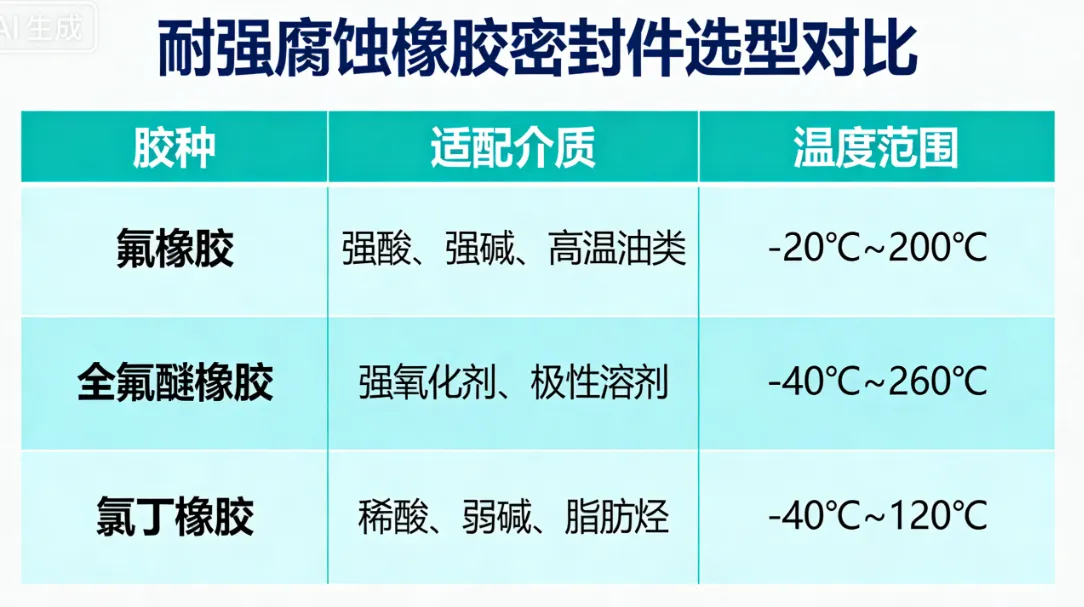
(5) Additional usage features
In addition to core performance, this type of seal also has many practical additional features. One is that there are no precipitates, and there are no components in the formula that are easily dissolved by the medium, which will not contaminate the medium (such as high-purity media in the food chemical and semiconductor industries), nor will it cause a decrease in its own performance. Secondly, it is easy to install and maintain, with a certain degree of flexibility, and is not easily damaged during installation. Some parts are designed as separate types with positioning structures, making disassembly and assembly convenient. After long-term use, it does not stick to the sealing surface and has low maintenance costs. The third is environmental compliance, which complies with environmental standards such as RoHS and REACH. Food and chemical products also comply with food contact standards such as FDA and LFGB, and are suitable for high-end compliance conditions.
2、 Selection guide for different corrosion conditions
The core principle of selection is to "match the medium, adapt to the working conditions, and take into account the cost". Based on the above characteristics, precise selection plans are compiled for different types of corrosive media, covering mainstream strong corrosion scenarios. At the same time, the key points for avoiding pits are clearly defined to help avoid sealing failure caused by selection errors.
(1) Classification and selection by medium type
1. Strong acid working conditions: Specific media include dilute/concentrated sulfuric acid, hydrochloric acid, nitric acid, etc. Fluororubber (FKM/Viton) and perfluororubber (FFKM) are preferred, followed by rubber composite PTFE; The commonly used types of seals are O-rings, oil seals, flat gaskets, etc. The core compatibility points are acid swelling resistance, oxidation resistance, and low medium permeability. Avoiding pitfalls: EPDM and CR are prohibited for concentrated nitric acid and fuming nitric acid, as they are prone to rapid aging and cracking; Hydrofluoric acid should prioritize FFKM or rubber composite PTFE, as ordinary FKM has insufficient corrosion resistance.
2. Strong alkaline working conditions: Specific media include sodium hydroxide, potassium hydroxide, alkaline slurry, etc. Ethylene propylene rubber (EPDM) is preferred, followed by butyl rubber (IIR) and rubber composite PTFE; Commonly used flat gaskets, Y-shaped rings, corrugated pipe seals, etc., the core adaptation points are alkali hydrolysis resistance and good elastic retention. Pit avoidance reminder: CR and NBR are prohibited under strong alkali and high temperature conditions (>120 ℃), as they are prone to hardening and loss of elasticity; Alkaline solid containing slurry should be formulated with high wear-resistant EPDM to prevent wear and failure.
3. Strong oxidant working conditions: including sodium hypochlorite, hydrogen peroxide, ozone water, etc., fluorine rubber (FKM/Viton) and perfluororubber (FFKM) are preferred, followed by rubber composite PTFE; Commonly used O-rings, sterile gaskets, etc., the core compatibility point is resistance to strong oxidative decomposition and no precipitation. Tip for avoiding pitfalls: Almost all common rubber types (NBR, CR, EPDM) are prohibited as they are prone to corrosion and pulverization by oxidants.
4. Organic solvent working conditions: such as acetone, ethyl acetate, benzene, methanol, etc., fluorine rubber (FKM/Viton) is preferred, followed by nitrile rubber (NBR, only applicable to low concentration alcohols) and rubber composite PTFE; Commonly used hydraulic oil seals, flange gaskets, etc., the core adaptation points are low swelling rate (<5%) and solvent extraction resistance. Avoiding pitfalls: EPDM and IIR are prohibited for ketones/esters, with a swelling rate exceeding 50%; High concentration alcohols (>95%) require alcohol specific FKM, while ordinary NBR is prone to softening.
5. Salt spray/marine corrosion conditions: including seawater, sea salt spray, industrial salt solution, etc., priority should be given to using ethylene propylene rubber (EPDM) and fluororubber (FKM/Viton), followed by chloroprene rubber (CR); Commonly used marine oil seals, flange gaskets, etc., with core compatibility points being salt ion corrosion resistance and resistance to moisture and heat aging. Tip for avoiding pitfalls: FKM is preferred for deep-sea high-pressure conditions, while EPDM is suitable for shallow sea/atmospheric salt spray; Avoid using ordinary NBR, as it is prone to corrosion and bulging by salt solution.
6. For corrosive gas working conditions such as chlorine, hydrogen sulfide, ammonia, etc., butyl rubber (IIR) and perfluororubber (FFKM) are preferred, followed by rubber composite PTFE and FKM; Commonly used vacuum gaskets, corrugated sealing tubes, etc., with the core adaptation point being extremely low gas permeability and resistance to gas adsorption. Avoid pitfalls: EPDM is prohibited under high temperature conditions of chlorine gas/hydrogen sulfide, as it is prone to chemical reactions; Low gas release rate IIR/FFKM should be selected for vacuum corrosion gas sealing.
7. Working conditions with mixed corrosive media: such as alternating acid and alkali, acid and organic solvents, etc., priority should be given to using perfluororubber (FFKM) and rubber composite PTFE, followed by high formula modified FKM; Commonly used combination seals, diaphragm seals, etc., the core adaptation points are broad-spectrum corrosion resistance and resistance to alternating medium corrosion. Tip for avoiding pitfalls: Do not use a single universal adhesive, as it may cause double failure of swelling/hardening.
8. Food grade corrosive media working conditions: such as food grade acetic acid, citric acid, food grade alcohol, etc., food grade EPDM and food grade FKM are preferred, followed by food grade rubber composite PTFE; Commonly used sterile gaskets, food pump oil seals, etc., the core compatibility point is corrosion resistance, no precipitation, and compliance with food contact standards. Avoiding pitfalls: It is strictly prohibited to use non food grade adhesives to prevent food contamination.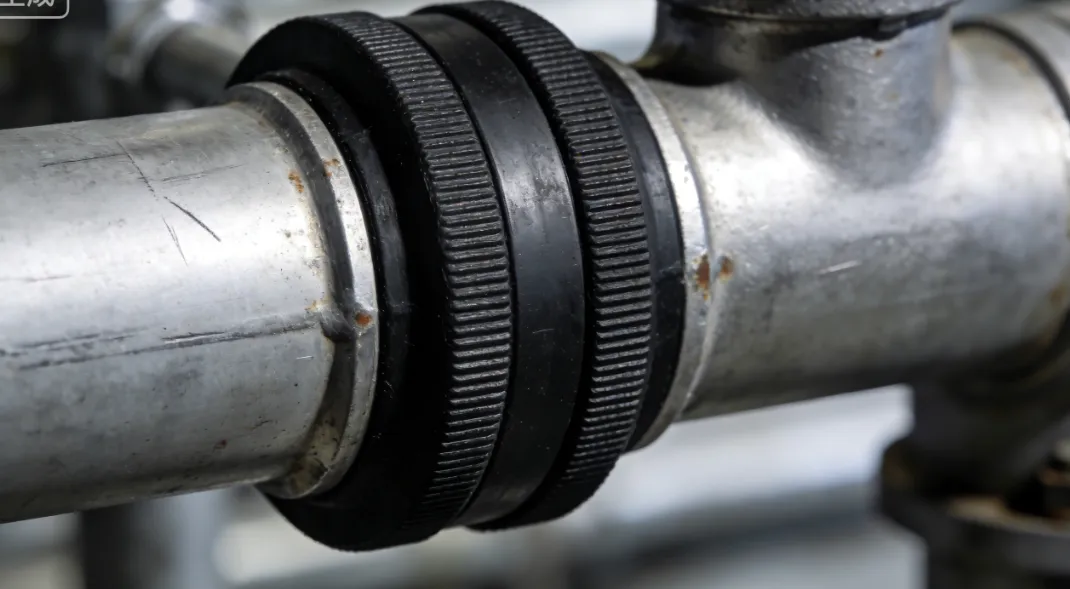
(2) Additional general principles for selection
In addition to matching the medium, when selecting, it is also necessary to consider operating conditions such as temperature, pressure, motion state, and solid content of the medium, and follow the following general principles to further improve the accuracy of selection:
1. Temperature matching: At room temperature (-20 ℃~80 ℃), conventional formula adhesive types are preferred; Choose FFKM/FKM for high temperature (>150 ℃); Select cold resistant modified EPDM/IIR+PTFE composite for low temperature (<-40 ℃).
2. Pressure matching: O-ring/flat gasket for normal/low pressure (<10MPa); High pressure (10MPa~50MPa) with V-shaped combination seal/metal wrapped rubber gasket; High pressure (>50MPa) priority rubber composite PTFE.
3. Motion state matching: Static seals (flanges, valves) prioritize flat gaskets/O-rings; Priority oil seal/Y-shaped ring for dynamic seals (rotating shaft, reciprocating rod); Choose low friction FKM+PTFE coating for high-speed dynamic sealing.
4. Solid medium matching: All corrosive media containing particles/slurry should be selected with high wear-resistant formula rubber, and PTFE wear-resistant coating should be added if necessary to prevent wear and failure.
3、 Summary
The performance of corrosion-resistant rubber seals is the result of the combined effects of rubber formulation, cross-linking process, and molding accuracy. Its core characteristics revolve around the three dimensions of "corrosion resistance, sealing, and adaptation", and the characteristics of different rubber types determine the differences in their applicable scenarios. The key to selection is to accurately match the type of corrosive medium, while taking into account working conditions such as temperature, pressure, and motion status, to avoid selection errors and ensure long-term stable operation of the sealing system, reducing equipment maintenance costs and safety risks.
With the upgrading of industrial technology, the complexity of strong corrosion conditions continues to increase, and corrosion-resistant rubber seals are also developing towards "wider temperature range, higher corrosion resistance, and longer service life". In the future, by combining innovation in modification technology and composite processes, its application scenarios will be further expanded, providing more reliable sealing guarantees for the safe and stable operation of high-end manufacturing industries.